
The competitive advantage smart CEOs build early
Blog Categories
By Marsha Koelmel
President, Catapult Executive Consulting
March 17, 2026
Every CEO leaves.
Opportunity, retirement, burnout, health, board pressure. The reasons vary, but the outcome is inevitable.
The real question is whether your organization will be ready.
Many assume they will conduct a search when the time comes. Some leaders leave their organizations scrambling. The most effective ones build something far more powerful long before they need it.
Over the years at Catapult Executive Consulting, I’ve worked with many CEOs and boards confronting this reality from very different starting points. Three common scenarios show how organizations approach succession and what they learn along the way.
1. Deliberate planning
One CEO came to us with a gift most organizations never get: time. She knew she planned to step down in three years and had internal candidates she hoped could succeed her.
Instead of guessing, we used 360-degree feedback, psychometric testing, deliberate development planning and coaching to evaluate each candidate’s potential. We worked with the candidates and CEO to create personalized development plans to accelerate their readiness, while advising the board to determine whether the internal candidates would truly be ready or whether a search would still be necessary.
The process was deliberate, transparent and calm.
No drama. No panic.
2. Built from scratch
Another CEO, early in his tenure and planning to stay for years, realized something unsettling: His organization had no real method of developing a pipeline for future leadership. None.
He asked us to help him build one, first for himself and his team, then for the entire organization.
That’s succession planning at its best. It’s not about departure. It’s about ensuring leadership continuity and developing the next generation of decision-makers.
3. Urgent reaction
This is the situation that keeps boards up at night.
A CEO hired a senior executive widely viewed as the future successor. At first, it seemed like a solid plan. Over time, however, warning signs emerged.
Given the urgency and uncertainty, the CEO asked us to engage with him and the board to assess the risk and determine the best path forward. Together we uncovered the underlying issues and developed a plan to evaluate the executive’s readiness to succeed the CEO.
When a presumed heir falters, the organization can lose both momentum and confidence overnight.
What these scenarios reveal
These situations start differently, but they each reveal that leadership transitions rarely become easier when they’re postponed.
Research from Russell Reynolds Associates shows CEO turnover at record levels globally, with boards increasingly making decisive calls within just a few years. McKinsey’s State of Organizations 2026 reports a growing leadership capability gap as organizations struggle to prepare leaders for today’s complexity.
Translation: The bench is thinner, the runway is shorter and the stakes are higher.
Organizations that navigate transitions successfully don’t wait for a retirement announcement. They treat succession as a continuous process, identifying talent early, developing leaders intentionally and maintaining multiple options.
The CEOs who approach succession this way don’t see it as planning their exit. They see it as protecting everything they’ve built.
So, here’s the question every board and CEO should ask, preferably before it becomes urgent: If your CEO role were vacant tomorrow, what would happen next?
If the answer involves uncertainty or delay, you’re not alone. The good news is that succession planning is one leadership challenge where preparation can truly change the outcome.
Leadership transitions don’t have to be disruptive. They can be moments of strength and progress when organizations invest in developing future leaders early.
About the author
Marsha Koelmel (pictured below) is president of Catapult Executive Consulting, where she advises boards, CEOs and senior leaders on executive search, leadership development and succession planning. She also serves as a facilitator for the BNP Executive Exchange, which brings together C-suite and senior executives to explore strategies, solve problems and gain actionable insights.

Related Posts
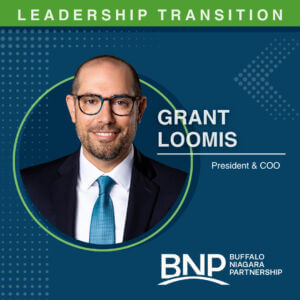
Grant Loomis named next CEO in planned leadership transition
The Buffalo Niagara Partnership announced that Grant Loomis has been promoted to President & Chief Operating Officer and will succeed Dottie Gallagher as Chief Executive Officer in June 2026.
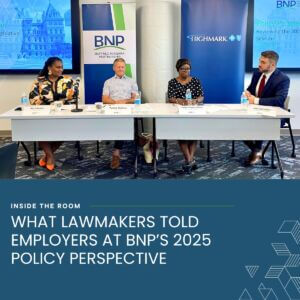
Inside the room: What lawmakers told employers at BNP’s 2025 Policy Perspective
The BNP hosted Policy Perspective, a piece of the BNP’s annual Government Affairs series. The standing-room-only crowd heard from three of our region’s most influential lawmakers: Assembly Majority Leader Crystal Peoples-Stokes, Senator April Baskin, and Senator Patrick Gallivan. The lawmakers spoke on a panel moderated by BNP Director of Government Affairs Josh Veronica.

Navigating risk and regulation: What financial and insurance leaders are watching
Buffalo Niagara’s financial and insurance sectors are facing a wave of change driven by federal policy shifts, volatile market conditions, and rising sustainability expectations. On June 12, the Buffalo Niagara Partnership hosted its 2025 Finance & Insurance Industry Leaders Forum (ILF) to examine how sector leaders are responding to new challenges and preparing for a more resilient, regulated future.

3 reasons why in-person networking matters for the next generation of leaders
Scrolling through LinkedIn can only get you so far.In today’s digital world, it is easy to assume that building your network can happen entirely online. But if you ask any experienced professional where their most valuable relationships started, chances are it was not over a screen—it was in person.BNP’s Young Professionals program was built on this idea. From our Tee Up For Networking event to our upcoming summer meetup, we’re creating moments that help early- and mid-career professionals connect in a more meaningful way.